7 Tips For Planning Your Plumbing When Building A New Home
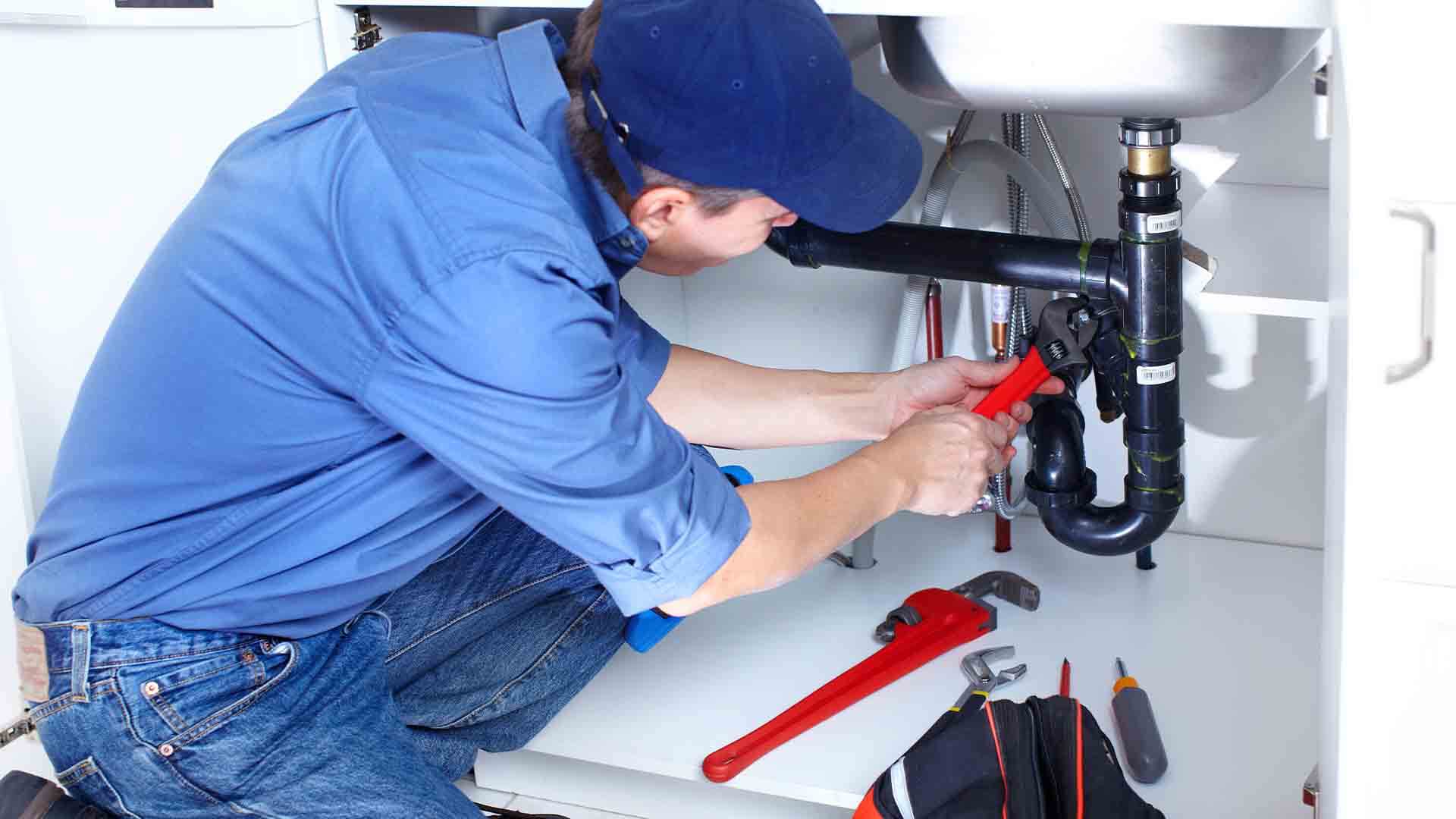
Building a new home requires dedicated planning and considerations before starting with the construction process. If you’re building a new house, you need to consider not only the decorations but also the plumbing, HVAC systems, and construction materials that’ll be used.
It can be stressful and troublesome if you build a home without the right preparations. For instance, a poor plumbing system can cause leaks and major water damage in the future. To avoid problems, you need to ensure that plumbing systems are properly installed.
Here are excellent and safety tips you can use when installing a new home’s plumbing system.
1. Secure Permits
The first thing you need to do before installing a plumbing system is to obtain and secure the right permits. It may take you some time to process everything, but securing permits will help ensure that your home meets all code guidelines and safety requirements. For you and your family’s safety, a permit allows professionals to inspect and check any mistakes in your plumbing design and prevent pipe malfunctions in the future.
2. Think About Your Plumbing Needs
It would be best to consider your present and future plumbing needs when designing a plumbing system. It means that you need to decide where your drain lines, plumbing, and sewer are installed to ensure functionality. Incorporate every present and future water needs in your plumbing system while you can still access it easily and avoid spending money on repairs in the future.
You should also consider your outdoor plumbing needs to ensure that you have enough outdoor plumbing faucet connections that you can use around your house. Consider seasons as well to make sure that your pipes are sturdy and will last despite extreme weather conditions, especially during winter.
3. Centralize the Plumbing System
When installing a plumbing system, installing everything in one place for easier maintenance and repairs in the future is crucial. Some of the appliances you should install together include the following:
- Water Softener
- Water Heater
- Furnace
- Sewer Connection
- Sewage Ejector Pit
- Sump Pump
You can install these together in the basement as it’s the most convenient space to put your system without being an eyesore. If you don’t have a basement, you can install them on the main floor, and inside a utility closet so they’re still properly tucked away.
4. Consider Water Softeners
If you have hard water issues, installing water softeners would be perfect for your home. You should also consider installing one even if you don’t have issues right now to ensure that you’ll be able to solve this type of issue in the future. It’ll be challenging to install water softeners in the future so save yourself from extra payments by installing one while building your home.
Always think from a long-term perspective when installing something for your home. By thinking of your future needs, you can save money and avoid stress from needing to install new appliances for your system.
5. Wet Wall Sharing
Sharing a wet wall can help you save money when building a home. What exactly is a wet wall? A wet wall houses the sewer lines, water supply lines, and vent stacks. Houses typically have separate wet walls for different rooms like bathrooms and kitchen to house the pipes, but you can save money by sharing a wet wall instead. You can make a layout where bathrooms share a wall or a kitchen and laundry room share a wet wall.
You can save money by having a shared wet wall because it’ll reduce the labor and materials you need to install them. It’ll also be easier to maintain and repair your plumbing if the pipes are together in one place.
6. List Down Rooms That Need Water Access
It would be best to consider all the rooms that need water access when designing your plumbing system’s layout. The top 3 areas you need to consider are the bathrooms, kitchen, and laundry area.
- Bathroom
Consider how many bathrooms you need when designing a house, and it’s best to evaluate them individually. Will you have a guest bathroom? A bathtub? A Jacuzzi? A Shower? It would be best to list down what luxuries your bathroom will have along with the necessary toilets and sinks.
- Kitchen
When designing the kitchen, you need to consider the appliances you will have in the kitchen. You want water lines for your refrigerator, dishwasher, and sink. You should also consider the future renovations you might have, such as adding a kitchen island that needs a plumbing line if you want to install a sink in the future.
- Laundry Area
The laundry area is as important as the bathrooms and kitchen. You need to put the washer connections in the right place so they’re easier to install and use. You should also have a proper drainage line in the laundry area to avoid water buildup on the floor whenever you’re washing the clothes.
Aside from these 3 priorities, you should also have a proper plumbing layout if you want a garden, an outdoor tub, and a pool. Prepare a layout for everything, even the ones you currently don’t need, to make future installations easier.
7. Accessible Shut-Off Placement
You may want easy access to your main shut-off valve in case of emergencies. While others typically place them on hard-to-reach areas, you should opt for an area with easier access. By doing this, you can quickly shut off your plumbing system in case there’s a leak, a ruptured pipe, or even when you just need to do the regular maintenance check. You can prevent major water damage and save money if you can easily access your plumbing system’s main valve.
Takeaway
It can be costly to install new plumbing lines in the future. Avoid unnecessary spending by ensuring that your new home’s plumbing system design that’ll meet all your current and future plumbing needs! Ensure that you have a safety permit, a centralized plumbing system, and backup water softeners if you need them in the future. These simple tips will help you design a well-working plumbing system that will last long.
Comments Off on 7 Tips For Planning Your Plumbing When Building A New Home
Just Starting Plumbing Courses? 5 Tips for Beginner Plumbers
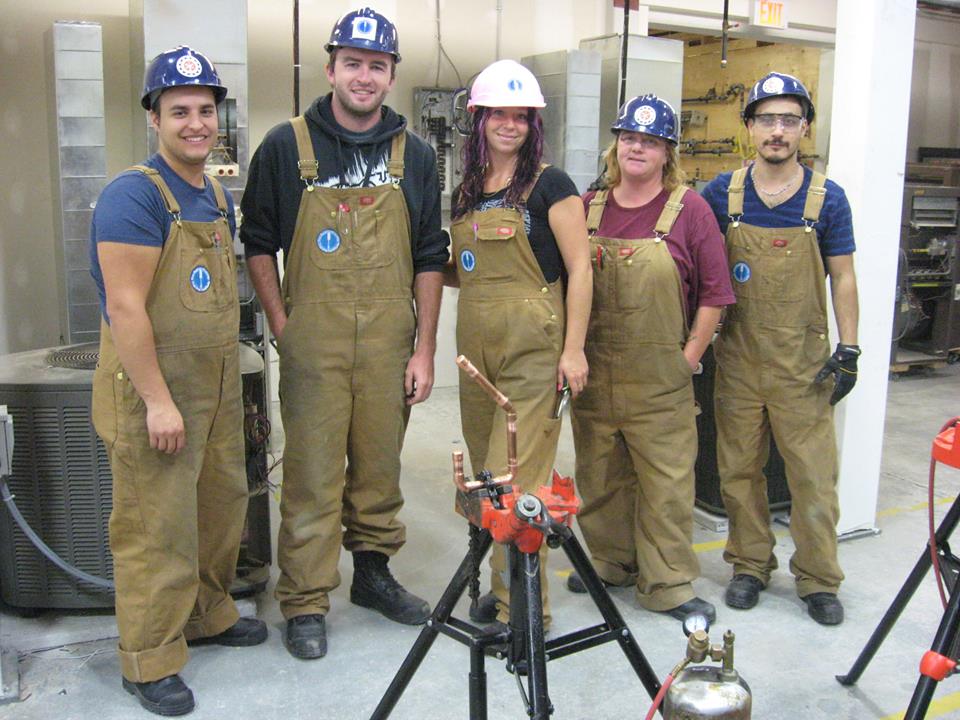
There’s so much to learn and remember at the start of trades training. Plumbing courses are no different. From technical terminology, tool names, building codes, and procedures, to just learning the names of your classmates—it can feel overwhelming at first.
However, with good instruction, hard work, and hands-on practice, your understanding and confidence will grow. Before you know it, you’re finished pre-apprenticeship training, completing your apprenticeship, and earning your Certificate of Qualification.
But in the meantime, what are some ways to ease your transition from plumber newbie to experienced pro?
Follow these 5 simple rules, and you’ll do just fine—not just in plumber courses, but throughout your entire career.
1. BUY THE BEST TOOLS YOU CAN AFFORD – AND MAINTAIN THEM
A quality pre-apprenticeship plumbing program will supply students with tools they can use during training, and take with them to begin an apprenticeship.
However, throughout your career, you will need to add to this collection—and any good plumber will tell you, it’s worth investing in the best tools you can get.
A high-end, properly maintained tool will have a big impact on the quality of your work (and will go a long way to prevent frustration and wasted time).
And don’t forget, this includes attire: good socks, boots, safety gear, and the right clothing for working in cold temperatures.
2. MAKE SAFETY YOUR TOP PRIORITY
What’s the golden safety rule of plumbing? Keep your hands out of your eyes, nose, and mouth—and never bite your fingernails!
You’ll be exposed to chemicals and bacteria, so protecting yourself with gloves and safety glasses is key. Of course, you’ll also need to pay close attention when working in confined spaces and at heights, and be sure to follow the safety procedures you’ll learn in plumbing courses.
Your employer and co-workers should make safety a top priority, but ultimately, it’s up to you to protect yourself, apply best practices, and keep alert.
3. ALWAYS CHECK YOUR WORK
Your employer and clients will always expect the job to be done right the first time. Nobody likes call-backs. It’s normal for small details to go unnoticed when you’re just starting out—so take the time to double-check your work.
Invest a few extra minutes to test out the drain you unclogged, the seal you repaired, the pipe you installed…and know your local plumbing codes and standards like the back of your hand.
4. SHOW UP ON TIME (STARTING WITH YOUR PLUMBING COURSES)
Think it’s no big deal to show up to class a few minutes late? Think again. Your instructor, and later on, your employer, will not take kindly to unreliability. What you lack in training and plumbing skills you must make up for in hard work, respect, and dependability.
Plan to arrive early, and make sure you’re ready to learn (and work) with the right tools, a good night’s rest, and a positive attitude.
And even after you’ve gained many years of experience, timeliness will continue to play an important role in delivering superior customer service.
Whether you’re responding to an emergency or making a routine maintenance visit, showing up on time is important for building trust with customers—and proving you’re a true professional.
5. OBSERVE THE PROS CLOSELY DURING PLUMBING TRAINING
You’ll go through several years of instruction to become a certified plumber. Make the most of your trades training and apprenticeship to soak up everything you can from seasoned pros.
This starts during plumbing courses, where you’ll train with plumbers with many years of experience. Keep your eyes and ears open for opportunities to pick up new skills, extra tips, and avoid common errors.
Building the habit of observation and continued learning will serve you well during your entire plumbing career. There’s always something new to discover, and not just from fellow plumbers.
When you’re out on a job site, keep an eye on HVAC techs, electricians, and carpenters to understand related aspects of the building and maintenance process. After all, all of these systems are connected, and it helps to have a sense of the big picture.
Haven’t started training yet, and looking for a top-rated pre-apprenticeship plumbing program?
Your next step is to speak with Admissions. An Admissions Advisor will guide you through the Plumber program, costs, financial aid, how to apply, and more.
Chat live with an Advisor now. Or click below to explore the program in more detail. We’re here to help!
Comments Off on Just Starting Plumbing Courses? 5 Tips for Beginner Plumbers
The 5 Main Types of Plumbing Pipes for Your Home Plumbing System

1. PVC Pipes
Polyvinyl chloride pipes (PVC) are commonly used as part of a sink, toilet, or shower drain line. Its plastic tubing is ideal for this kind of usage because it protects the water from rust and corrosion better than other types of pipes. This capability also makes PVC pipe incredibly durable. Unless they are subject to some kind of damage, PVC pipes will last indefinitely.
PVC pipe is also able to handle high water pressure. This is why it can also serve as your home’s main water supply line. It is also a lighter-weight material, making it easier to work with than the more traditional galvanized steel piping options. PVC pipes contain a smooth inner lining as well, which protects against sediment buildup and makes them more resistant to blockages.
Drawbacks surrounding PVC pipe include limited size options, an inability to withstand hot water, and concerns over toxicity. Though PVC piping meets all standards set by the American National Standards Institute, there are concerns that it may introduce polyvinyl chloride chemicals into drinking water, potentially causing respiratory and reproductive issues. It is for this reason that some states have banned PVC plumbing pipes from transporting drinking water.
2. PEX Pipes
PEX, or cross-linked polyethylene, piping also refers to an affordable plastic tubing commonly used for water supply lines. Similar to PVC piping, it prevents rust or corrosion from leaching into the water.
Professionals remain drawn to PEX pipes because they are flexible and easy to weave through walls, ceilings, basements, and crawl spaces. At the same time, they’re strong enough to withstand the pressures of your water supply. Cross-linked polyethylene pipe is also color-coded for hot and cold water, making it easy for plumbers to identify and organize when on the job.
3. ABS Pipes
Acrylonitrile butadiene styrene (ABS) pipe is similar to PVC pipes in nature but easy to identify based on their black color. Acrylonitrile butadiene styrene is also particularly resilient to cold temperatures. It is predominantly used for vent and drain lines.
Though this kind of plumbing pipe is easy to install, it can warp when exposed to direct sunlight. ABS pipes are also noisier than other types of plumbing pipes, causing disturbances among some homeowners.
4. Copper Pipes
Copper pipe has been a staple within the plumbing industry for decades. This type of plumbing pipe can last upwards of 50 years and is commonly found in sinks, showers, tubs, and other fixtures in new and old homes. Copper pipes remain popular among plumbers and homeowners alike because they are corrosion-resistant and best suited to protect the quality of the water.

Copper pipes are able to handle high water pressure and are tolerant of both hot and cold water temperatures. It’s also able to be recycled, making it a somewhat environmentally-friendly option.
That said, are a few drawbacks to consider. Because it is so rigid, plumbers cannot use copper piping in tight spaces. It is also the most expensive type of plumbing pipe. As the price of copper continues to rise, so will the costs of any project involving copper pipe.
5. Cast Iron and Galvanized Steel Pipes
Cast iron pipe and galvanized steel pipe are rarely included in new construction, though they are commonly found in homes built in the early 20th century. Still, cast iron plumbing pipes are incredibly durable and remain in use for parts of water distribution systems today.
Cast iron pipes were typically used as sewer pipes or for other drainage purposes. Their popularity largely stemmed from the fact that they are heat-resistant and reduce the sound of moving water.
Unfortunately, the cast-iron pipe is prone to rust and corrosion. Over time, this will affect its ability to maintain a clean water supply. These types of pipes have largely been replaced by copper or PEX pipes in residential plumbing repairs.
Conclusion
Different plumbing pipe types are reserved for different purposes. For a successful career as a plumbing professional, you’ll need to know which to use for specific plumbing systems. Find out what it takes to get HVAC certified!
Learn everything there is to know about plumbing in residential, commercial, and industrial structures with our associate degree program in plumbing and heating technology. Students will be introduced to basic theory and practices of heating and plumbing and receive hands-on experience in a laboratory setting.
Comments Off on The 5 Main Types of Plumbing Pipes for Your Home Plumbing System
11 Tips For Starting A Successful Plumbing Business

Wondering how to start a plumbing business? Well, first you have to keep in mind that plumbing and service sector covers areas such as sanitary, water, gas, heating and cooling, metal roofing, industrial wastes, drainage, building services, mechanical services, air-conditioning, and even fire services. Because these are essential services for commercial and residential buildings, the demand for plumbers never slows down.
In the United States, the plumbing industry was estimated to be $95 billion strong in 2013, according to a research. The potential of plumbing business can be gauged from the fact that plumbers earn more than many workers from other professions.
Giving an estimate of how much a plumber earns, The New York Times says, “Plumbers and the related trades of pipefitters and steamfitters, who often work in commercial and industrial settings, earned median pay of about $49,000 a year nationally, well above the $35,000 average for all occupations, according to 2012 data from the Bureau of Labor Statistics. The top 10 per cent earn more than $84,000 a year. The average in big markets like Chicago and New York is about $70,000.” This shows that your plumbing startup can make it big in the market.
Having said that, make it certain that you have planned your business well. There are a lot of aspects such as knowing your niche, marketing your services, getting a nice logo, an attractive business card, using social media to connect with people etc that you need to cover.
Here Are Some Key Tips To Follow For Starting A Plumbing Business
01. Know Your Niche
While plumbing services include pipe repair and drain cleaning, there is a lot of competition in such commonly provided services. If you base your business on these, you are going to face a tough competition from everywhere. This is where the importance of finding out your niche lies.
Do some research to know which plumbing areas are least covered by other companies. For example, your venture can repair a custom bath or it can offer specialized services in the installation of water pipes and gas pipes. Or, you may specially deal in the installation of sanitary equipment.

Your niche may be commercial maintenance, hospitals, nursing homes or large scale buildings and warehouses. Whichever it may be, make sure that you pick a niche that you can handle well.
An advantage of limiting your plumbing business to a particular area of plumbing is that it can operate efficiently. Since yours is a small business that is working on a tight budget, spreading out to many plumbing jobs will put more pressure on your limited resources.
Such a widespread business will mean hiring many workers and specialists, which may not suit your budget. You will also have to buy more tools. Therefore, do some research and see which particular plumbing service you would like to offer with least competition.
02. Get Training And Experience
Without knowing a particular field of plumbing inside out, your business will go directionless. So, get a first-hand experience of the work in which you want to branch out. This is especially important if you are not a licensed plumber yet.

To gain the experience, it is advisable to be an apprentice with a plumbing company. This way, you will develop the required skills for the job, which will be of a great advantage in running your business. Alternatively, you can take courses related to plumbing. Join some community colleges or trade schools for these courses.
With the training and experience, you can add value to your business in many ways. Most importantly, since you become an expert in your field, it helps build a trustworthy brand identity of your company and services.
Take Care Of The Legal Aspect
As is the requirement for most businesses, you need to submit important documents on time for starting a plumbing business. There are, in fact, many plumbing clearance certificates that you need to submit to a construction company. These documents should be given after the respective authorities give the clearance to your business.
Your state requires you to get documents such as plumbing license, a contractor’s license, and plumbing permit. In addition to that, you will also submit other documents such as plumbing forms, proposals, and guide to your client.

Also, you require a tax identification number (TIN) and a liability insurance. In case you intend to sell some plumbing equipment, parts, or products, you will need to produce a retail license as well. So, make it certain that you have acquired all the legal documents.
Talking about the legalities, do not forget to get a trademark for your business. A logo is the trademark of any company and its business. So, you should ask a professional designer to create a logo for your plumbing startup so that people can easily identify your business whenever you offer your services to them.
04. Have A Unique Business Card
One of the key things you must have for your business is a business card. The card has all of your contact details such as phone number, fax number, website address, email address, company’s location, etc. Thus, the card comes in handy when a client wants to contact your company for your plumbing service.

However, modern business cards are specifically designed to make a good impression on the recipients. In fact, the card can even reflect your brand values. So, have some creative business card design ideas first before designing your card. Get services of a professional designer who understand how to design your card specifically for your business.
Make A Business Plan
A business plan is like your guide that helps you keep on the right track. Do not mistake the plan for merely chalking out some financial resources here and there. It is not a randomly created list of DOs or DON’Ts. The fact is that the plan involves all things that you are going to do in next many years even a decade related to your plumbing business. Merely having a company logo design for your plumbing venture is not enough. A plan to proceed in the coming days is also equally necessary.

So, a lot of researching of your plumbing niche goes in preparing the plan. You must mention every available resource to you and how you are going to explore that for the growth of your business. The plan should list out your financial resources, numbers of employees, officials, their salaries, office space, equipment you need to buy, and marketing plans etc.
06. Have A Unique Logo
A uniquely designed logo does many things for the advancement of any business including your plumbing startup. A logo is not just a symbolic representation of what your company makes or sells. It is not just a trademark to legally identify your business. More than that, it is a visual that attracts your potential customers to your offerings or services. They will identify and verify your services by checking your logo.

However, your plumbing business logo design should be a unique, stylish, and memorable piece of work. If it stands out from your competitors’ logos, people will take your business as unique and different from others. That is the message your logo will send to the potential clients.
07. Create Your Business Website
No business can grow without having a good online presence. This is because most people search for products or services including plumbing services online. They usually first visit a prospective company’s website to find out more about its services or products before buying anything. Most of them get an inkling of a business by visiting its website. If a web page design is user-friendly, people will like to stay at it for a longer time. This means that many of them may think of buying your services.

But make sure that the website has relevant images and text content of your plumbing company. It should clearly tell all about what your business and who the target customers are. All the relevant information such as the services, pricing packages, contact details, terms and conditions, etc should be given in the web pages. Also, your website should load quickly when people want to click on its links.
08. Generate Leads And Convert Them To Sales
Another thing to do for starting a plumbing business is to generate enough leads. Then, you should convert them into sales as well. To do that, you need to adopt some strategies to reward those who bring customer referrals. If they suggest some potential customers, reward them with discounts. You can offer discounts to frequent customers, thus to win their hearts and develop a long-lasting relationship.

Another strategy will be to offer follow-up services for free to the customers who call you again for some minor plumbing work. This will help you in turning those customers into your loyal customer base. They will keep coming back to you whenever they need plumbing services.
Similarly, you are also able to generate online leads. There are some internet marketing companies that will help you get customers using your websites and links. You will need graphic design services of a professional graphic designer to create a host of designs that work for bringing customers online.
09. Use Social Media For Business Promotion
Your potential customers use social media to connect with the world. They are on different platforms such as Facebook and Twitter. There are many social channels such as YouTube and LinkedIn, which you can explore to drive customers to your business. All you need to do is to take your company’s services to the social channels.

So, first, create your social media page on the popular channels. Then, post content relevant to your plumbing niche on these pages regularly. This way, you can attract potential clients to your company’s offerings. You should try hard to build a relationship with your customers using these pages.
Recommended Reading:
- Create Meaningful Plumber Logo With These Tips
- 15 Simple Steps For Starting A Home Improvement Business In 2020
- 10 Construction Company Logo Design Ideas For Businesses
- 9 Marketing Strategies To Expand Your Construction Business
10. Use Flyers As Your Affordable Marketing Tactics
Flyers are one of the cheapest ways to advertise and market your upcoming business. These are the one-leaf thin sheet of paper that has a lot of information about a business. You can distribute flyers to the people who are passing by. They will get some details about your business while moving on. The cost of creating many such flyers is within your small budget. You can easily create them by using cleaning flyer templates.

However, flyers are also your chance of making an impression on the people so that many of them inquire about your business later. Therefore, create an online flyer design using some software on your own and print it at a cheaper cost. But the design should be unique and impressive. It should tell about your attractive discounts on the services and its key features.
11. Lower Down Your Overheads
Since yours is a startup, its financial means are smaller. You should keep it in mind for starting a plumbing business. Make all the efforts that can save you money. For example, think of running your plumbing services from home. Remember that there are some tax benefits on setting up your office at home. There are many ways you can check your overheads to a minimum. This will also help in creating a positive cash flow for your business.

You should also think of lowering your costs when creating a lot of marketing materials for advertising and marketing your services. So, find out less costly online graphic design services that can lower cost down to your small budget. Make sure that you have enough cash flow at hand to meet any urgent expenses. That you can ensure by reducing your overhead expenses.
So, these are the key points to consider when starting a plumbing business successfully. If you are also planning to operate one such business, ensure that you have a nice logo, business card, and other such visuals to impress your clients. To create such visuals for your business at affordable costs, you can rely on the services of Designhill, which is a leading crowdsourcing platform.
You can launch your design contest to get dozens of unique concepts from as many designers. In a short period of one to two weeks, you get a logo etc design that is worth representing your startup business.
Comments Off on 11 Tips For Starting A Successful Plumbing Business
10 Perks of Being a Plumber
Have you ever wondered why someone would choose to be a plumber? Maybe you’ve considered it as a career for yourself. Either way, the plumbing trade is a rewarding career for many reasons.
Plumber Perks
Here are 10 of the many perks of being a plumber:
1. Job Security: There’s no need to worry about your job being outsourced or eliminated — as long as there are pipes and drains, the world will need plumbers. The industry is experiencing steady growth, too.
2. Opportunity for Entrepreneurship: A licensed plumber can choose to work for a company as an employee, or they can strike out on their own independently.
3. Job Variety: Some people hate to be stuck at a desk all day. Plumbers get out of the office — all around their neighborhood, visiting residences, and businesses — and every day is different.
4. A Chance to Help People: It’s great to have a job that makes a difference in people’s lives. Plumbers help improve the quality of life and safeguard the health of their community by keeping water and sewer pipes well maintained.
5. Mental Challenges: Working as a plumber means solving a puzzle with every job. A plumber has to analyze the situation, find the problem, and figure out the most efficient way of solving it. This type of job never gets boring!
6. A Feeling of Importance: Let’s face it — when people need a plumber, they really need a plumber! Often they need one immediately to prevent water damage in their home or business, fix toilets, make sure they can take a hot shower, and keep their drinking water safe.
7. Exercise: Who needs a gym membership when you haul heavy pipe around every day? Plumbers bend, crouch, and squeeze into small spaces. They also use upper-body strength to run the equipment. A hard-working plumber can stay in great physical condition.
8. No Student Loan Debt: Most plumbers learn their trade either in a vocational school or as apprentices assisting licensed plumbers. On-the-job training is the opposite of college tuition: You literally earn while you learn.
9. Social Interaction: Working as a plumber means you get to meet all kinds of people, from all walks of life. Whether your project is in a commercial building or a residence, it’s guaranteed you’ll never feel isolated or lonely while on the job.
10. Great Pay and Benefits: Good plumbers earn a comfortable living, whether they work for a plumbing company or as independent contractors. Many plumbers join a union, and they receive excellent benefits such as health insurance, a 401(k), life insurance and more.
As you can see, there are many reasons to become a plumber. Many people take their plumbing for granted and don’t think about it — until it stops working. However, well-maintained plumbing is crucial to our way of life and our health. Therefore, there will always be a demand for good plumbers. It’s nice to feel needed!
Trust your plumbing to Mr. Rooter of Oneida. We’ll be there to help you with whatever plumbing issue arises.
Comments Off on 10 Perks of Being a Plumber
3 reasons to build a good relationship with your plumber
Communication

For your Canberra plumber to do their job effectively, they need to understand exactly what the problem is. Therefore, if you have built a solid relationship with your plumber, you can quickly and easily communicate this information to them. Whether you are able to give your emergency plumber details over the phone or even send them photos of the problem, this information will help them do their job faster and more efficiently. A plumber who understands you and your needs can bring the right tools for the job, have any necessary parts ready, and save you time and money.
Save Money

Plumbers can also save you money in unexpected ways. For example, your plumber can help you with:
– A water softening system. This will remove naturally occurring minerals in your water such as calcium, limestone, lead iron, and magnesium. Without these minerals running through your taps and appliances, you can extend their lifespan by up to 30%. You’ll also find you’re able to use less detergent and shampoo without these minerals reducing your soaping efforts.
– Repairing leaks. A slow leak can quickly add up to a big water bill. An unidentified leak can also cause mold which can lead to expensive repairs.
– Gas hot water systems. Switching to a tankless hot water system can save your power and your water bills as you’re only heating the water as you need it.
– Updating fixtures. You may already know about low-flow showerheads and taps, but did you also know your plumber can save you money by installing an energy-saving dishwasher and washing machine?
– Maintenance. You may think that the worst part of a plumber’s job was when they’re called into the bathroom. However, most plumbers find the most unpleasant and difficult substance to work with is grease. When you have a good ongoing relationship with your plumber, they can help you maintain your kitchen sinks and food disposals to avoid costly, messy, and smelly build-ups of grease.
Safety

We take fresh, clean running water for granted. Even when we need an emergency plumber, our water systems are usually back online in several hours. However, keeping your water systems and pipes clean and well-maintained means that your plumber is ensuring your access to clean water and reducing your risk of exposure to a range of diseases.
It is also important to remember that plumbing can be dangerous and shouldn’t be attempted as a DIY project. Your plumber could be facing up to 100 pounds of pressure from a burst water pipe. Therefore, it’s best to leave the repairs and maintenance to the experts, for your own safety.
Comments Off on 3 reasons to build a good relationship with your plumber
Ways to prevent frozen pipes (and what to do if they freeze anyway)
Is your home at risk for frozen pipes? Water damage caused by burst pipes is a real threat during harsh Canadian winters. Here’s your guide to reducing the risk of your pipes freezing—and tips for thawing them out if they do.
5 tips to prevent your pipes from freezing
1. Drain outside water lines
Water lines in unheated or uninsulated areas are most at risk for freezing. Before winter arrives, turn off and drain outdoor water lines.
2. Keep the heat on
Keep the temperature in your house above 21 oC, particularly during extreme cold. Many of us turn the heat down at night to save energy, but it’s best to avoid this when very cold temperatures are in the forecast. You can save yourself a costly water damage repair and insurance claim.
3. Keep a tap dripping
Pipes can burst when water freezes and then expands. But water won’t freeze as easily if it’s running. When the weather is bitterly cold outside, leave a cold water tap dripping—the bathtub faucet is best. If you notice the water pressure dropping, it’s a sign your pipes are starting to freeze.
4. Keep interior doors open and garage doors closed
To make sure heat circulates freely, keep bathroom doors open. If you have water pipes in your garage, keep the garage doors closed to prevent freezing.
5. Think about prevention before you go away
No one wants to come back from vacation to a flooded house, so prep your home before you leave for a long period of time:
- Turn off the water main to drain the water pipes.
- Starting at the top floor of the house, turn on all the taps and flush the toilets.
- Drain your hot water tank—turn off the inlet valve, attach a hose to the tank drain and run the water into the basement floor drain.
- Unhook your washing machine hoses and drain them.
- Ask a friend to check on your house—your home insurer might require this.
- Keep the heating set to a temperature only a few degrees lower than usual.
- Open kitchen and bathroom cabinet doors, as well as closet and attic doors, so warmer air can circulate.
Extra steps you can take to prevent damage

Move exposed pipes
Ask a professional to relocate exposed pipes to protect them from freezing, especially if you’ve had issues with frozen pipes in the past.
Insulate pipes
Insulate water pipes in unheated areas of the house, like the basement, garage, and attic. Insulated pipes help reduce heat loss and keep water from freezing when temperatures drop. Doing this can also help cut your heating bill.
Thawing frozen pipes
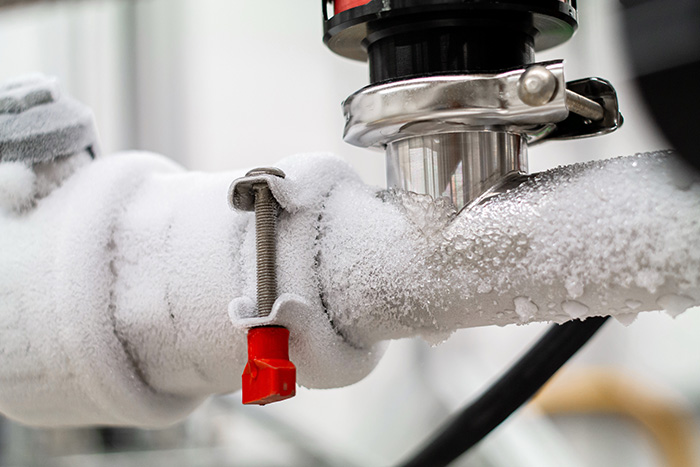
Despite your best efforts, your pipes can freeze during an exceptionally cold spell. If you turn on your taps and only a trickle of water comes out, or the water pressure suddenly drops, you might have a frozen pipe. Here’s what to do:
- Shut off the main water valve.
- Warm the frozen pipes with a hair dryer, heating pad or portable space heater. Don’t use a blowtorch—it could damage plastic pipes or cause a fire.
- If you can’t reach the frozen pipe, or it won’t thaw, call a licensed plumber.
- Keep the nearest faucet turned on while treating a frozen pipe. As it melts, water will begin to flow through the faucet.
- Check the other faucets in your home—if one pipe freezes, others might too.
- Before turning on the water again, check for broken or damaged pipes—when in doubt, call a plumber. Better to spend a little money making sure everything is alright than risk more damage to your home.
- If you do have water damage, call us for more information.
If you’re a policyholder with The Personal, protect your home with the Alert program. You’ll get alerts on your phone if there’s a water leak or a risk of freezing. And if you’re away on vacation, you can get alerts sent to a relative or friend.
Comments Off on Ways to prevent frozen pipes (and what to do if they freeze anyway)
Signs You Need A New Toilet
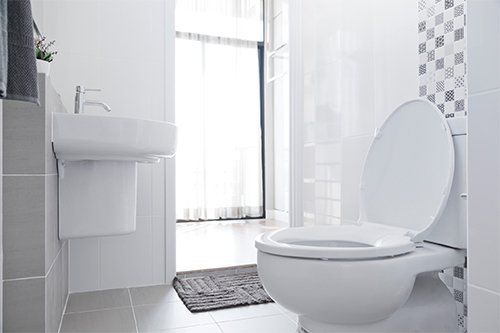
You rely on your toilet daily, but you probably don’t think much about it until something goes wrong. Just like other major appliances in your home, your toilet will probably need to be replaced after years of use. How do you know when it’s time to call a plumber to install a new toilet?
- There are cracks in your tankIf you frequently see a puddle of water around your toilet, this could be more than a simple leak: You could have cracks in your tank, and the toilet may need to be replaced. A plumber can help you determine if it’s an issue that can be repaired. If the toilet appears to be working properly – flushing well, not clogged, not running – but there is water around the bottom of it, that could mean there are cracks in the bowl.
- You have an old toiletRegardless of whether your toilet is working properly, if you have had the same one for decades you should consider replacing it. Older toilets are likely to be less efficient than newer ones, which means they could be driving up your water bill. Advancements made in the past few years have resulted in toilets that use significantly less water. Current Federal law requires residential toilets (flush tank type) manufactured and sold in the U.S. after Jan. 1, 1994, to use no more than 1.6 gallons per flush, and some newer toilets use even less. If your toilet has not been replaced since 1994, it may be time for a new one. When shopping for a more efficient model, you may want to consider one that offers dual-flush technology. This gives you the option of a partial flush for liquid waste and a full flush for solid waste, so you can use less water while still flushing every time.
- You feel it wobbleA toilet that wobbles or rocks are not normal. If your toilet is unsteady, call a plumber right away to evaluate the problem. While it could be a simple matter of tightening some bolts, it could also mean that the floor underneath is damaged or rotting and you’ll need to have it professionally repaired.
- You’ve had to fix it oftenIf you’ve had to call a plumber several times in the past few years to have your toilet repaired, it may be time to purchase a new one. It will likely save you money in the long run.
- You have a round bowlWhile there’s nothing drastically wrong with your round bowl, replacing it with an elongated model is worth considering. These types of bowls tend to be more comfortable than round ones because they allow for more seating room. An elongated bowl also stays cleaner and allows fewer odors to escape, according to Consumer Reports. Round bowls do have a slightly smaller footprint, but if you have room, consider making the switch.

Give your local Benjamin Franklin® plumbers local Benjamin Franklin a call if you see any of the trouble signs, or if you’re interested in replacing your old toilet with a newer model.
Comments Off on Signs You Need A New Toilet
6 Great Tips to Keep Pipes From Freezing
:strip_icc():format(webp)/stop-freezing-pipes-2124982-revision1-5c01a886c9e77c0001439273.png)
Cold temperatures can cause water pipes to freeze. Freezing in a pipe creates a lot of pressure inside the pipe and can cause the pipe to burst and likely lead to serious flooding, especially when there’s no one around to turn off the water. The best prevention against frozen pipes is to keep them warm enough to stay above the freezing point. You can do this with any one of six simple steps or, better still, a combination of measures.
Not Just for Cold Climates
It is a common misconception that frozen pipes are an issue only for homes in typically cold climates. However, the homes that are actually more vulnerable to frozen pipes are those in typically warmer climates because the pipes may not be properly insulated against frigid temperatures, or they may be located in unprotected areas (or even outdoors). Abnormally cold weather puts these pipes at risk.
Wherever you live, you need to worry only about the water supply pipes, not the drain pipes. Water pipes are small, only about 1 inch in diameter or smaller. Drain pipes are 1 1/2 inches and larger and are usually made of plastic. Drain pipes carry waste water, but they do not hold water and are not pressurized like water pipes, so freezing inside drains is not a concern.
Tip #1: Keep the Heat On
If you or your tenants are leaving for a long period of time, make sure that the heat is kept on in your property. It may be difficult to convince your tenants to leave their heat on when they are away, especially if they are responsible for paying their own utility bills. You should inform them that the heat can help prevent pipes from freezing, and if pipes freeze and burst, it can cause a lot of water damage to the property and to their possessions.
The heat does not have to be kept as high as you normally would keep it if you were actually in the property, but keeping it set above 50 F is a good idea. This should provide enough heat to keep the pipes warm and to prevent any water inside from freezing.
Tip #2: Allow the Faucet to Drip
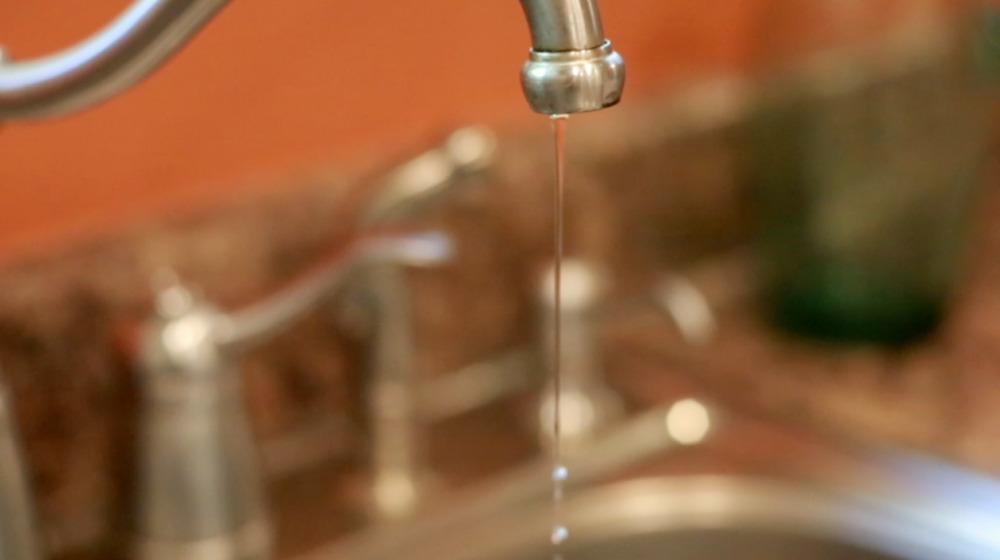
If you are afraid a pipe will freeze, you can open the faucet fed by that pipe just a bit so the faucet drips slightly. Allowing the faucet to be open like this relieves pressure in the system. If a pipe freezes, it is actually the pressure that is created between the blockage and the faucet that will cause the pipe to burst. Allowing the faucet to be open will prevent this pressure from building up and thus keep the pipe from bursting. If the faucet is served by both hot and cold water pipes, open both faucet taps slightly, or set a single-handle faucet (such as a kitchen faucet) to warm.
Tip #3: Keep Interior Doors Open
Pipes are often located in cabinets. When the temperature drops, it is a good idea to keep these cabinet doors open so that the heat from the rest of the house can keep the pipes warm as well. You should also keep all interior doors open so that the heat can flow throughout the home.
Tip #4: Seal up Cracks and Holes
Seal gaps around holes where pipes run through walls or floors, especially where the hole is letting in cold air. Use caulk or spray foam insulation (such as Great Stuff) to fill the gaps. If possible, seal holes on both the interior and exterior side of wall or floor. Cold outdoor air that gets in through holes and gaps can make a cabinet compartment, which is usually pretty cold, even colder.
Tip #5: Apply Heating Tape

Heating tape works like an electric blanket for pipes, supplying heat directly to the pipe to keep it warm curing cold spells. This can be a good solution for short sections of pipe that are at high risk for freezing and are easily accessible so you can install the tape and can monitor it for problems.
There are two types of heating tape. One type turns on and off by itself when it senses heat is needed. The other type must be plugged in when heat is needed and unplugged when not in use; it does not have an automatic or manual on/off switch. Much like a space heater, these products can be dangerous, so you must follow the product’s direction and safety procedures exactly.
Tip #6: Add Extra Insulation
Pipes that are located in areas that do not have proper insulation, such as basements or attics, may need extra insulation to keep from freezing. Pipes in basements or attics are not the only ones that may not be properly insulated from the cold. If you have had a problem with pipes freezing anywhere in your home, extra insulation could be the cure.
Pipes can be fitted with foam rubber or fiberglass sleeves to help decrease the chances of freezing. This can be an easy solution for pipes that are exposed but can get expensive if walls, floors, or ceilings have to be opened in order to properly insulate the pipe. Additional insulation can also be added to walls and ceilings to keep the pipes warm.
Insulation can help keep a pipe closer to the temperature of the water inside the pipe, but it does not add heat to the pipe and will not prevent freezing if the pipe is exposed to prolonged freezing temperatures.
Comments Off on 6 Great Tips to Keep Pipes From Freezing
4 Ways To Adjust Water Level In Toilet Bowl
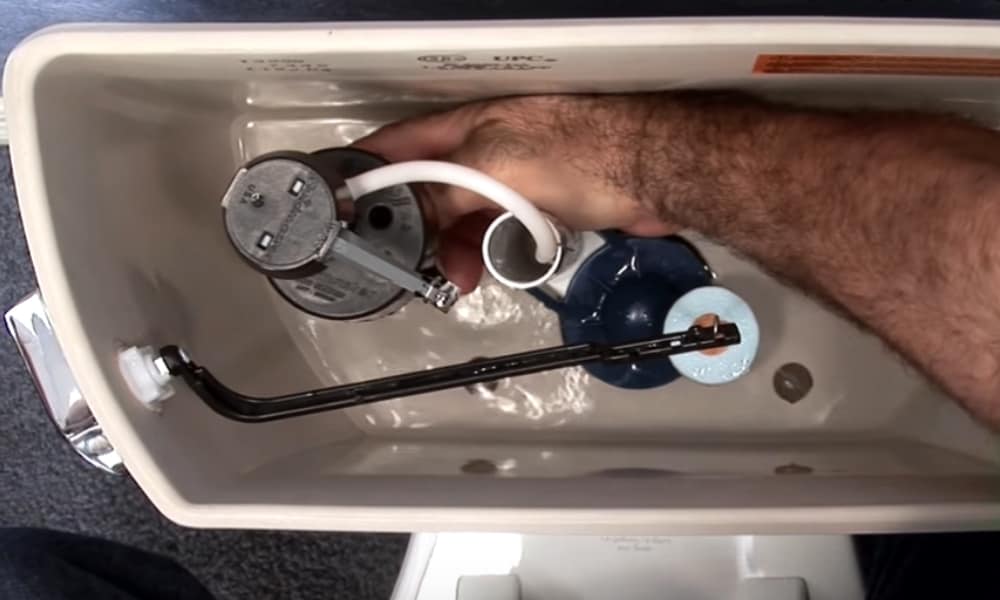
If the water in your toilet bowl is too high or too low, it is important to find out why and fix the problem. Fortunately, the causes and solutions are generally quite simple, and you probably won’t need to call a plumber – so here are 4 ways to adjust the water level in a toilet bowl.
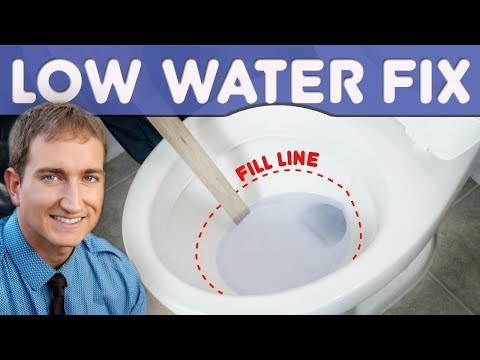
If you want a few extra tips, you can check out this useful and sometimes amusing video too.
Too High Or Too Low?
The correct way to adjust the water level in your toilet bowl depends on whether it is too high or too low. Let’s look at the different techniques for each situation in turn.
If The Water Level Is Too High…
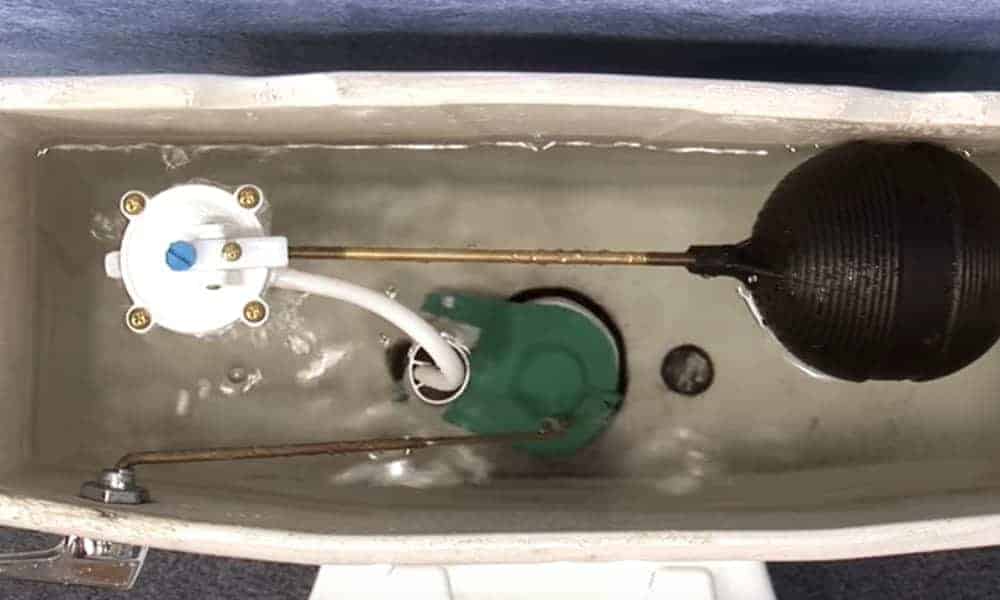
1. Unclogging pipes
With any kind of flushing toilet, if the water level in your toilet bowl is too high, the chances are that this is due to the pipes being clogged. When you flush your toilet, water can’t flow out as it should and so simply sits in the bowl.
Sometimes, the water level will gradually drop as the water flows out slowly – but with bad blockages, the water will remain in the bowl indefinitely.
Worse, if you continue to flush the toilet, the water will eventually overflow the bowl and toilet seat and end up all over your bathroom floor.
If you suspect this is the problem you are dealing with, there is a quick test you can do. Fill a bucket with water and pour it into the toilet bowl. If the water remains in the toilet bowl without flowing out, it is safe to assume you have a blockage.
To resolve the problem, you can first try putting on a pair of rubber gloves and reaching into the toilet bowl to see if there are any larger items like diapers or tampons blocking the toilet.
If you don’t find anything, the blockage may be further down the pipe, so the next step is to try unblocking it with a plunger.
If the plunger doesn’t do the job, you may consider pouring boiling water into your toilet or using chemical products to unblock it – and if none of these techniques works, it may be time to call in a professional.
If The Water Level Is Too Low…
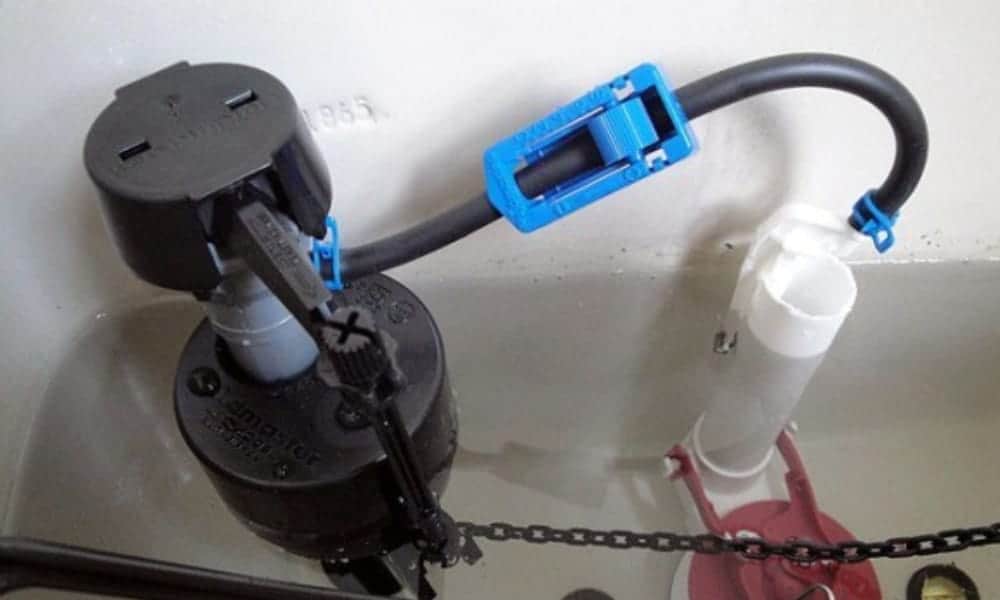
2. Adjusting the water level in the tank
If the water level in your toilet bowl is too low, there are several possibilities, but the most common reason will be related to what’s going on inside your toilet’s tank, so this is what you should check first.
Start by removing the tank lid and setting it aside and check the level of the water in the tank. It should be about an inch below the level of the fill valve and overflow tube, and if it is significantly lower than this, you will need to adjust the water level in the tank.
There are several variations on toilet tank mechanisms, but most use a float – either in the form of a ball or a cylinder – to control the level of the water
Whichever type you have, the first step is to turn off the water supply to the toilet. Find the external water valve and close it, then flush the toilet to remove all water from the tank. If the valve is closed correctly, the tank won’t refill again.
If you have a ball version, check that it isn’t damaged. If it is damaged or there is water inside the ball, it will need to be replaced.
If everything looks to be in working order, simply adjust the height of the ball as necessary – there should be a screw that allows you to do this.
Once you have made the necessary adjustments, turn the valve back on, allow the tank to fill, flush the toilet and check to see if the water level is now where it should be.
With a cylinder version, the process is almost identical. To adjust the height of a cylinder float, there should be a screw that you turn to move it up or down. When you have adjusted as necessary, fill the tank and flush to test.
3. Clear the plumbing vents
If the problem doesn’t come from the tank, there could be an issue with the plumbing vents in your home.
In a properly functioning plumbing system, vents allow air in to maintain the correct pressure. If the vents become blocked, air can’t enter, and the water won’t flow properly.
The concept is the same as the old college trick of inserting a straw into a beer bottle when trying to drink it as quickly as possible. The straw allows air to enter the bottle, letting the beer flow out in only a few seconds.
The tell-tale sign that suggests you might have blocked vents is that your toilet gurgles and splutters when you flush another toilet in your home or empty the bathtub.
If this happens, you might try climbing onto your roof and flushing your pipes out with water from a garden hose.
If this is a recurring problem in your home – perhaps due to falling leaves – it might be worth considering investing in some kind of cover for your vents to prevent leaves or other detritus from blocking them again in the future.
4. Cracked toilet
If you can’t find any other reasons for the low water level in your toilet bowl, check for hairline cracks. If you find the water level drops gradually after each flush, this is a sign that you might be dealing with a leak of some kind.
Another giveaway is if you find puddles of water on the floor – although the leak or crack could be below the floor level, so puddles of water won’t always be visible.
If your toilet is cracked or you have any other kind of leak, it is important to fix it as quickly as possible since this can lead to serious structural damage in your home that will be expensive to repair later if you don’t catch it in time.
With this kind of problem, you may find your only option is to replace the whole toilet.
Resolve The Problem Quickly
As with most plumbing issues, the key is identifying the cause early and taking action. If you put the repairs off until later, the problem will only get worse – and you may find you need to spend a lot more money fixing it than if you had taken action when you first noticed the issue.
Comments Off on 4 Ways To Adjust Water Level In Toilet Bowl